Treatment and Control
The presence of Porcine
Circovirus II on a farm will not be protective.
The majority of farms are positive to PCVII worldwide, and this has made
no impact on the spread of “epidemic” PMWS.
This disease appears to move as a novel agent entering a population of
pigs – either a novel PCVII (for example the 321 RFLP
variant in
PMWS free farm -
Control
If the farm believes it is free of PMWS, the farm should attempt to minimize the risk of infection.
The causal agent of PMWS is transmitted to the farm by two main routes
Locality – the disease has spread to closed units with high biosecurity that were within 1.5 miles from a newly affected farm. On two occasions the next farm became clinical within 4 months.
Pig to pig movement –
|
|
Pig to Pig movement is the premier source of infection. The movement of semen and gilts (or boars) from an infected farm has resulted in a spread of the clinical signs of PMWS. Farms, which have purchased semen and gilts from breeding farms, which have demonstrated no clinical signs, have remained negative – after 5 years of monitoring. |
If your farm is free of clinical PMWS ensure that the genetic source is also free and/or practice on-farm AI collection and homebred gilts.
Other routes
Until the causal agent is known, the spread of PMWS cannot be predicted. In my own experience two other routes have been indicated:
Movement of unclean buildings/equipment – weaner arks were purchased from a clinically affected unit and moved to an isolated clean unit. The clean unit demonstrated clinical signs within 2 months.
Repopulation into a poorly cleaned farm, which was depopulated because of severe clinical signs. The unit was not thoroughly cleaned with clear evidence of feces remaining in the pens.
PMWS infected farms
- Treatment of clinical cases
To reduce the clinical impact,
the producer must minimize all the “stressors” on to a pig, especially during
the eight-week period from
PMWS temporarily destroys the pig’s ability to fight any pathogen or potential pathogens by destroying the B lymphocytes in the lymph nodes. These B lymphocytes produce antibodies, a key component of the body’s natural defense mechanisms. The pig will recover because the stem cells of B lymphocytes in the bone marrow will replenish the killed cells. The key to fighting this disease is threefold:
Minimize the stress on the animal to support its failing immune system
Reduce the numbers of pathogens the pig has to fight with its failing immune system
Enhance the pig’s immune system so it recovers its immune system as soon as possible
|
Air and ventilation |
External biosecurity
Biosecurity is vital to reduce
the introduction of new pathogens to the sick farm. It is essential that producers avoid making
any mistake such as moving dirty equipment from one unit to another. This must include vehicle transport between
farm and especially the slaughterhouse. In
Internal biosecurity
Enhance internal biosecurity through the thorough cleaning of buildings to minimize pathogen build up. Because the previous batch of pigs has suffered PMWS the background “bugs” will increase. With inadequate cleaning this occurs batch after batch. The buildings and facilities will become progressively more “pig sick”. Adopt stringent cleaning programs based around the following cleaning protocols:
|
|
|
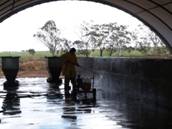
Cleaning hoop structures |
|
|
|
|
|
Use of lime washing as final disinfectant |
Note that all-in/all-out should include not only moving the pigs but having cleaned water supplies, feeders, air and ventilation equipment, floor surfaces and finally medicines, especially needles and syringes.
An essential component of all-in/all-out is that the building is fully prepared for the next group of pigs. For example ensure that the room is warmed for nursery pigs and that the drinkers are at the right height etc. It is no longer good enough to correct these faults a week after placement.
The clinical problems may become severe enough that it may be necessary to contemplate partial depopulation or even a depopulation and repopulation to enable thorough cleaning and modification of the existing facilities.
It is only through a thorough
examination of the pig business can all-in/all-out be achieved. The move towards 8 or even 9 sq feet per pig
at 280 lbs has reduced the impact of PMWS on European farms, although the high
mortality rate will naturally provide more space to the survivors. Adequate
floor space can only be achieved by setting and achieving control of the
breeding target batch after batch of pigs.
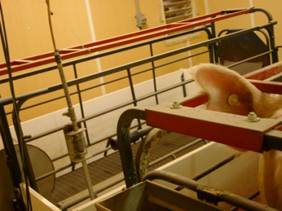
All-in/all-out must start in the farrowing area. Many
In the
|
|
|
|
Poor breeding management resulting in empty
farrowing crates |
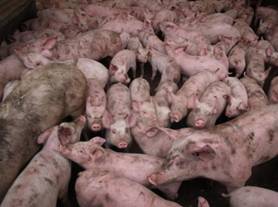
Pigs of variable age being mixed. This cannot happen with PMWS |
Stock management
It may be necessary to consider some other options regarding management of the pig themselves.
- Streaming – Consider not placing the poorest 10% of pigs into the nursery at weaning. These weaker animals require additional care and a different nutrition from the 90% other pigs. These pigs are not re-introduced to their peers. For this to work adequately, these pigs are placed in separate accommodation.
|
b. Hospital pens – care of the compromised pig. When the clinical signs of PMWS start remove affected pigs to a suitable hospital pen and provide a more comfortable environment and TLC (tender loving care). The removal of these compromised pigs from the rest of the group will reduce the spread of any diseased agents. |
|
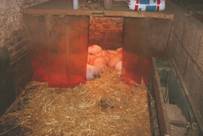
- Treatment regime – Adopt a 7 and 14 day rule to compromised pigs. Antibiotics will not stop PMWS but are essential to treatment of secondary infections. Pigs, which survive the 8 week immunological weakness period, will finish, although some will be permanently runted.
|
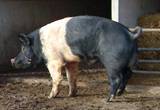
d. Hybrid vigor – Discuss with your genetic supplier the possibility of enhancing hybrid vigor with different boar lines. |
|
|
|
Hampshire |
Pietrain |
|
|
Pietrain and
Canadian Hampshire pigs have been used in boar lines to good effect in |
||
- Weaner growth rates – Attention to detail in the first 3 days post-weaning
- Immunity enhancement – Piglets born to mothers with low immunity of PCVII will have lower colostrum antibody levels. Ensure that the background immunity to immune depressing pathogens such as PCVII is raised by good feedback routines. Intentional inoculation of gilts using autogenous vaccines from tonsilar scrape should be considered. Dead PCVII vaccines have been developed, but their effectiveness is yet to be determined. These vaccines are administered to the sow to enhance her colostral antibodies. Obviously, for these vaccines to work it is essential that piglets obtain a sufficient quantity of colostrum.
Environmental management
This can be divided into four categories: water, feed, floor and the air. Management of the environment is specifically aimed at reducing stress.
All drinkers need to work as recommended by their manufacturer. Pigs must not have to fight over the drinking supply. Ensure the water quality is excellent and aim to reduce excess minerals in the water. Bacterial loads should be reduced to Public Water Quality standards. The use of water sanitizers has proven extremely beneficial. Note the position of the drinkers must be placed away from the obvious sleeping area.
Feeder management
|
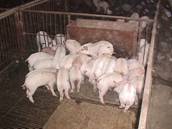
The feeders need to be managed to minimize fighting over feeders. When considering the maximum number of pigs per pen, ensure finishing pigs have access of 3 inches of feeder per finishing pig. Consult with your feeder manufacturer for further advice. |
|
Feed quality
Mycotoxins
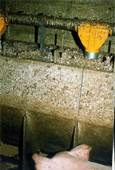
It is vital to minimize the effects of mycotoxins in the feed. Many mycotoxins have a negative effect on the immune system. Routine cleaning and removal of all moldy feed from feed bins and feed lines is an essential part of the farms all-in/all-out program.
|
|
Bird and rodent contamination of the feedReduce fecal contamination of feed from birds and rodents by clearing up spilt feed, bird proofing the building, and covering the feeders. Rodent control needs to be well maintained with a 3 feet open walkway around each building. |
Feed ingredients
Enhance the immune system through nutritional supplementation shown to be successful on a number farms, even though the science behind their use is still being studied. Most of the nutritional supplements aim to increase available anti-oxidants. Vitamin E and Selenium supplementation are known to enhance the immune system, especially in the weaned pig. Vitamin C is not usually required by the pig, as it makes it own, but in some cases increasing Vitamin C in the feed has been beneficial to the sick grower. European and Canadian producers included organic acids, organic Zinc and herbs to enhance the immune system. Work is being undertaken regarding the provision of specific energy and protein balances. The feed should be of the highest quality and as easy to digest as possible.
|
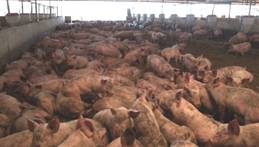
Stocking density It is essential to provide all
finishing pigs with 8 sq feet. With
the increase in finishing weights to 280 lbs it may be worth considering 9 sq
feet per pig. For weaned pigs provide
3 sq feet to 60 lbs. |
|
Flooring area
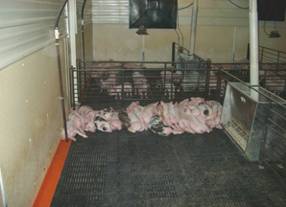
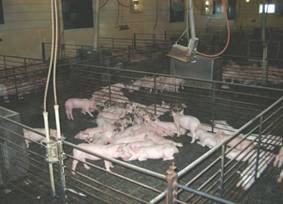
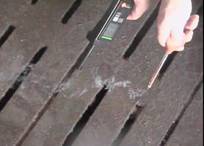
The pig needs to be provided with an area where all the pigs can sleep. Sleep is only really achieved in a draft free zone, which provides a thermoneutral environment – without chilling. Modify the comfort zones within a house to satisfy the pig’s requirements. This may mean that walls have to be moved and pens have to be combined. Smoke rooms to analyze air movement within a building. However, the number one aspect is to observe the pig’s lying and dunging patterns.
|
|
|
|
Observe sleeping and lying patterns- why are the pigs
on the left chilled and lying next to the passageway? |
|
Floor consistency
Maintain the floor so that it does not damage the feet and skin of the pigs. Damaged feet provide an entry point for pathogens into the pig. Once through the skin the pathogens rapidly move to the lungs where they can form abscesses and weaken the pig further.
Air and Ventilation
The ventilation system is a major weakness on many pig units resulting in respiratory distress. In cases of PMWS it is vital to minimize any ventilation stress. Areas of ventilation stress that may affect the mucocilary escalatory are vital to avoid.
Temperature
Pigs require to live within their thermo neutral zone and producers need to be aware of the temperature requirements of pigs. On many farms pigs are too hot in the summer time due to lack of an adequate cooling system. This places the pig under severe stress and can affect feed intake. It is essential to follow agreed temperature curves, in particular in the first stage nursery.
Draughts and
chilling
|
Draughts are possibly the number one environmental factor that
affects the pig’s ability to fight respiratory disease. Draughts are a serious stress factor
affecting the animal’s ability to sleep properly, it is vital that producers
provide pigs with zones and in particular a draught free sleeping area. A draught can be defined as any air movement
in the sleeping area in excess of 50 feet/minute. Note holes in curtains/walls can result in
unexpected draughts. |
|
Gas concentrations
The ventilation system should be maintained to prevent the smell of ammonia (below 10 ppm). Ammonia and carbon dioxide can act as an anesthetic to the mucocilary escalator.
Curtain management
Curtain sided buildings are becoming more common in
Fan maintenance
|
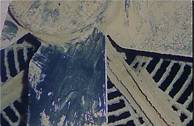
Most farms have very poor fan maintenance programs. Producers must be aware that a dirty fan can be 40% less efficient than a clean fan. This results in poor air quality and variable air patterns throughout the building (as fans can have different levels of dust on their blades affecting their performance). Note the large fans in tunnel-ventilated buildings must have their belts checked and tightened regularly. |
|
Dust
|
There are three aspects to dust; majority of dust fall in the
particle size greater than 3.6 mm. Assuming the respiratory tract is not damaged
these particles are removed before entering the alveolus. Particles less than 1.6 mm will not settle in the alveolus and will move in and out of the
respiratory tract. Only particles
between 3 and 1.6 mm will
enter the lung alveolae tissues. This
is important as it means viruses require a piggyback to gain entry into the
lung tissues. |
|
Humidity
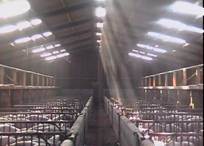
Low humidity less than 50% results in a reduction in particle size and therefore more particles enter the lungs and these can carry disease agents. Dry air also causes injury to the mucocilary escalator. Moisture over 75% results in a damp environment, which overwhelms the respiratory defenses
Medicine Management
General
|
|
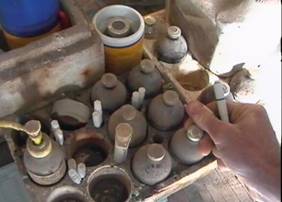
Medicines are to be appropriately used. While PMWS does not respond to antibiotics, as is it is probably caused by a viral agent, majority of the secondary agents, which actually result in the death of the pig, are bacterial and these are responsive to antibiotics. Note however, that without an effective immune system, once the antibiotics are removed, the remaining pathogens can still overwhelm the surviving pigs. |
|
It is essential to follow veterinary advice and recommendations and keep notes of the relative effectiveness of different routines used in the hospital area. Between groups of animals dispose of all needles and syringes. Avoid any blunt needles. |
|
Vaccines
Administration
Vaccines cannot be administered between 30 and 120 lbs as many pigs with a failing immune system will not respond to the vaccine and in some cases it may make the pig’s condition worse as the pig has to ‘fight’ the vaccine. Ensure all vaccines are carried out before 30 lbs, this may provide especially difficult for some vaccine programs, for example Swine Influenza.
Storage
It is essential to store vaccines appropriately. If the Circovirus vaccines prove effective, their storage will be a major determinant for their use.
Serum therapy
Serum therapy became popular in Europe however, while effective at reducing mortality in the 30-80 lbs pigs. Unfortunately it proved only to move the mortality problems to a heavier weight at 100+ lbs, which was more expensive on the farm output. This practice has subsequently stopped.
Stockmanship
|
Well trained, dedicated, enthusiastic stockpeople are essential to the efficient running of a pig farm. The good stockperson must have sufficient time to look after the animals and not spend all their time just running around maintaining the building. Many stockpeople fail to provide sufficient care primarily associated with a lack of organisation and prioritising ability. |
|
Take Home Message
All-in/All-out; Reduce stress
– the killer; Practice 110% cleaning;
Provide the best feed possible and enhance hybrid vigor
|
|
|
|
|
|
|
|
|
|
||