Use of Vaccines through the Water supplies
Today there are
several modified live vaccines which are available for administration through
the water supply.
These would
include:
Ileitis – Lawsonia
intracellularis,
Erysipelas – Erysipelothrix rhusiopathiae,
Salmonella choleraesuis
Escherichia coli – E. coli
The following
notes describe a method of preparing the water supply so that the vaccine has
the best chance of working. However,
please follow all advice given with the vaccine.
|
Vaccine storage |
|||
|
|
Ensure
that the vaccine
is stored properly
on the farm. Some of the vaccines have
very specific storage requirements |
||
|
Preparation of the water supply |
|||
|
|
These
vaccines are live. Therefore, the vaccine (organisms) will be
killed and will be ineffective if there are any antibiotics or other agents,
such as chlorine, in the water supply |
||
|
Inactive
chlorine with sodium thiosulphate or skimmed
milk. Note with skimmed milk do not
reconstitute with hot water and this may also kill the vaccine |
|||
|
Ensure
that all antibiotics are removed from the water lines and feed lines for at least 2 days before
vaccination. These antibiotics also
need to be avoided for at least 5 days |
|||
|
The medicator |
|||
|
|
Ensure
that the medicator is thoroughly cleaned.
This should include the medicator itself, housing and filters used. But note that the medicator
cannot have cleaning materials remaining in the medicator
or buckets. Soaps can destroy these
live vaccines |
||
|
Measuring the amount of water to be drunk by the pigs –
the day before medication, for example around 10-11 am. |
|||
|
|
Fill
a new, clean stock solution container with clean water and let the water run
through the system |
||
|
Record
the starting volume of water |
|||
|
Note
the time of day when you start running the water through the system |
|||
|
After
a 4 hour period, measure the amount of water that was used out of the stock
solution. This will be the amount of stock solution
that will be required. |
|||
|
Pigs
have drinking habits that will change with time. Between two individual days the drinking habit
does not change much |
|||
|
Flush the water supply |
|||
|
|
Fill
the stock solution container with clean water and allow medicator to run
overnight to flush any remaining antimicrobial residues |
||
|
Day of vaccination (Need
the vaccine and sodium thiosulphate or skim milk) |
|||
|
|
Half
an hour before the time yesterday when the water use consumption over the 4
hour period was calculated prepare to administer the vaccine |
||
|
Stop
the medicator temporarily |
|||
|
Empty
the stock solution container. |
|||
|
Refill
with the amount of clean water the pigs will use in 4-5 hours (as determined
yesterday). |
|||
|
Add sodium thiosulphate (which neutralizes chlorine)
to clear the water of chlorine. Note
some of the trade brands contain a dye which allows you to track the product
through the water supply.
Alternatively skim milk is used. |
|||
|
|
Thaw
the vaccine in warm water (not hot) water. This should take 10 minutes |
||
|
When
the vaccine has thoroughly thawed |
|||
|
Add
the vaccine to the stock solution |
|||
|
Remove
the drinker line to the last drinker |
|||
|
Start
the medicator and allow
the sodium thiosulphate or skim milk to flush
through the water
line. If a dye is included with the
sodium thiosulphate the dye will be seen in the water. |
|||
|
Replace
the drinker line to the last drinker |
|||
|
Allow
the medicator to run until all the stock solution has been used. |
|||
|
Make
another 4 litres of stabilizing solution to flush the remaining vaccine out of the water lines |
|||
|
During
administration of vaccine monitor vaccine consumption |
|||
|
With a medicator using skim
milk |
|||
|
|
Calculate the volume of water to be drunk
within the 4 hours |
||
|
Calculate the dilution ration ie 33:1 and
divided the volume to be drunk by the dilution rate. This is the quantity of 3% skim milk to add to the bucket – see
calculator |
|||
|
If skim milk power is used add 2.5 g of
skim milk powder for every litre of water to be drunk to the water in the
medication bucket – see calculator. Unfortunately the quantity of skim milk
power makes mixing difficult to achieve. |
|||
|
Add the vaccine to the skim milk and mix
well |
|||
|
Proceed with the vaccination |
|||
|
After vaccination has finished |
|||
|
|
Ensure
that the water supply is fully restored. |
||
|
Do not
use water or feed medications for at least 5 days after vaccinating through the water
lines. This is to prevent killing the
vaccine before it adequately stimulates immunity. |
|||
|
Reasons for
vaccine failure |
|||
|
|
Vaccine
storage |
||
|
Vaccines
stored at the wrong temperature or variable temperatures. The -70C frozen ileitis vaccine is
particularly sensitive if stored for a week in conventional fridge. |
|||
|
Vaccine
mixed with chlorinated water or antibiotics |
|||
|
Time
to deliver vaccine |
|||
|
Water
consumption more than estimated |
|||
|
Pig
Flow changes |
|||
|
Hot
days – water consumption increases – variable. If weather very variable delay vaccine |
|||
|
Medicator problems |
|||
|
Loss
of suction |
|||
|
Medicator hose come out of bucket |
|||
|
Vaccine
timing |
|||
|
Vaccine
administered too late – too close to the outbreak |
|||
|
|
|
|
|
|
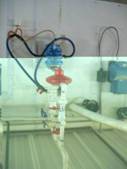
Ensure water
medicator thoroughly cleaned |
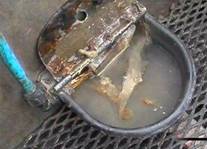
Ensure water
supplies are thoroughly cleaned |
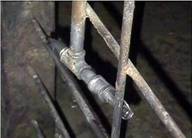
Ensure that the
water supply is readily accessible to all the pigs in the house |
|
Estimator
for the use of 3% skim milk and skim milk power
Using
3% skim milk
For 550 pigs of about 10 kg bodyweight it is required
to measure the quantity of water they drink over the 4 hour period
Click on the spreadsheet below, the yellow squares can be customized.

Using skim milk powder
