Wean-to-service
interval interpretation
The wean to service interval is a crucial fulcrum to pig flow control. It is essential to understand the impact of the wean-to-service interval on both subsequent farrowing rate and litter size.
|
|
|
|
Graph illustrating the impact of the wean to service
interval on subsequent farrowing rate of the bred sow |
Graph illustrating the impact of the wean to service
interval on subsequent total litter size of the bred sow |
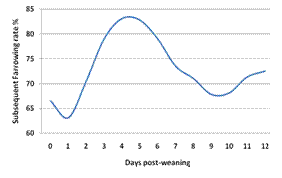
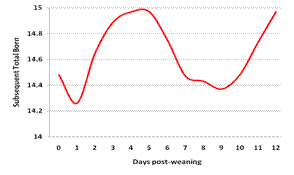
The graphs clearly show how vital it is to get sows to cycle between 4 and 6 days post-weaning.
Unfortunately on many farms we always have a number of sows which fail to cycle during this 4 to 6 day post-weaning “sweet spot”.
Percentage of sows cycling on any day
post-weaning
|
|
|
|
General view of number of sows cycling from weaning to day
32 |
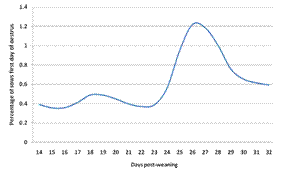
Detail of the number of sows cycling around day 26
post-weaning |
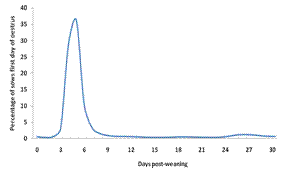
While ideally 90+% sow weaned sows will cycle 4-7 days
post-weaning, there is a persistent number of sows who demonstrate oestrus
later. A review of these sows can
provide a useful insight into farrowing and breeding stockmanship. When the data is looked at in detail a small
rise is noted in the percentage of sow’s cycling for the “first” time around
day 26 post-weaning (22 to 30 days post-weaning).
Consideration of the possible reasons why sows should return to oestrus post-weaning can produce interesting revelations about the stockmanship in the farrowing and breeding areas.
Possible reasons and targets for a sow to
be recognised in oestrus post-weaning
|
Wean to service
interval |
Target # sows |
Interpretation |
|
0-3 days |
0 |
Not in oestrus. Sow failed to eat at the end of lactation |
|
4 to 6 days*1 |
92 |
“Sweet spot” good feed intake. Controlled weight loss in lactation |
|
6 to 7 days*2 |
5 |
1st parity sows cycle a day later than 2+ parities |
|
7 to 21 days |
2.5 |
Not in oestrus. Late cycle, sow failed to eat sufficient in lactation and/or lost too much weight. Lactation oestrus. |
|
22 to 30 days |
0.5 |
Sows cycled normally post-weaning, but the 1st post-weaning oestrus cycle was probably missed. |
|
31 plus days |
0 |
Combination of reasons from above with an additional oestrus cycle. (18-24 days) |
*1 Normal wean to service interval 2+ parity sows 5.6 days
*2 “Normal” wean to service interval 1st parity sows 7 days. Note this can be reduced if these sows eat and do not lose excessive weight in their first lactation.
Major reasons for delayed oestrus is excessive weight loss during lactation associated with poor feed intake in lactation and missed oestrus behaviour.
Typical reasons for sows failing to eat in
lactation
- Basic stockmanship error
For example – sow too fat in gestation, water supplies inadequate or farrowing room too hot.
- Too small a litter
If sows have less than 7 piglets suckling, the lactation drain is insufficient to stop the sow from cycling. The sow then starts cycling while suckling. This oestrus is missed and 21 days later (note normal range 18-24 days) she cycles.
- Sow stops eating or abandons her litter
Once the sow stops eating, the blood insulin change will instigate oestrus within 4 to 6 days later – despite being in the farrowing house.
Note with lactation lengths over 28 days lactation, oestrus naturally becomes more common.
The lesson in this, is that it is vital to maintain good feed intake in lactation and adhere to a feeding regime, for example, the Stotfold lactation feeding curve. Eating properly for a 28 day lactation results in a 6.6 kg a day average feed intake consumption: entry to the farrowing room to the point of weaning; with a peak intake of 10+ kg on day 18 of lactation. (If only feed while lactation is considered, the average will be 8.2 kg per day).
Prior to weaning the breeding manager should, with the assistance of the farrowing manager, mark all sows which have not eaten properly and have lost excessive amounts of weight. These animals can be expected to have a longer wean to service interval than a sow which eats properly and has not lost too much weight.
Monitor lactation feed purchases
For a 10 sow a week batch farrowing farm (250 sows) practicing 4 week weaning:
The farm should purchase 2.3 tonnes lactator feed per week or 120 tonnes lactator a year.
Summary: Cost implications
The major cost implications of failure to understand wean to service intervals is an empty farrowing place.
This equates to
- 11.5 pigs not sold at 80kg dead weight – or 920 kg deadweight;
- There is a minor cost of 2.5 to 3 kg a day dry sow feed eaten by the delayed or missed sow;
- The variation in breeding numbers can results in over- and under-stocking in the growing herd;
- These delay sows fill vital space in the breeding area, putting additional stress on the system;
- And most importantly the stockpeople are frustrated trying to get persistent sows not cycling back into the herd. Then they try to manipulate the reproductive cycle of these sows with hormones – not an easy thing in pigs!
All of these problems result in an increase in the cost of production.