Sperm Morphology
Photographs
|
|
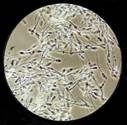
Down the microscope
the sperm should be seen to be active with forward motion. In very good samples wave motion is seen |
|
In contaminated
samples agglutination of sperm can be seen.
This can also occur with chilling |
|||
|
7μm 0.7μm 37.4 μm |
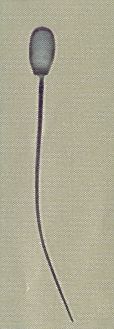
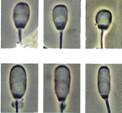
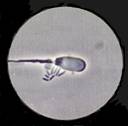
The normal sperm
with a tail central to the head. The
tail is straight without any kinks.
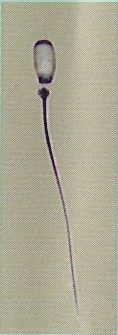
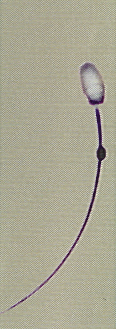
The head is a smooth even head. On the right we see
proximal and distal cytoplasmic droplets.
This may have little significant impact on fertility. They are more common in immature
sperm. The droplet comes from the
acrosome/head cover which uncovers at ejaculation and then runs down the tail |
|
|
|||
|
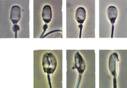
Head abnormalities
are not common. The photographs
illustrate a range of abnormalities.
Detached heads can be common in certain boars. If the head is abnormal attachment in the
oviduct and to the egg will be impaired. |
|
|
||||
|
Tail abnormalities
are common with the variety of bent and coiled tails. Deformities of the tail interferes with the
sperms ability to swim in the oviduct and through the zona pellucida |
|
|||||
|
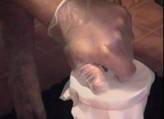
Poor semen
collection techniques will result in increased contamination of the
sample. This may be recognised by the
clear presence of bacteria in the sample |
|
Review collection
routines. Note preputial fluid will kill semen. The semen sample may also smell |
|
|||
|
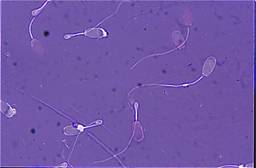
Using stains such as
Eosin/Nigrosin stain the sperm may be clearer. Some of the stains also allow an assessment
of whether the sperm were alive or dead. |
|
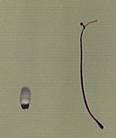
The sample on the
left contain a dead sperm in the middle, one detached head, one bent tail
and two normal sperm |
||||
|
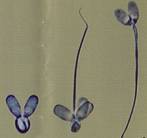
What are the
abnormalities you can see in the sample on the right? |
|
|
||||






While semen morphology is interesting, please note that only in extreme cases can fertility be affected by abnormal sperm cells. Second samples should be examined if more than 30% of the sperms cells examined are abnormal.
Also note that a single examination may be almost meaningless. The identification of a sub-fertile boar takes several serial semen samples and record analysis
The female filters out many of the abnormal sperm as they enter the oviduct. It has been shown that in the horse, despite being inseminated with semen samples with 85% abnormal sperms, this resulted in 90% normal sperm in the oviduct.
Remember you are examining the population of sperm not the individual