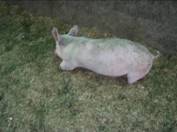
Common
Developmental / congenital Abnormalities
|
Condition / Level |
Possible Cause |
Comments |
|
Arthrogryposis - 0.2% |
Hereditary |
Destroy piglets |
|
Artresia ani - 0.4% |
Hereditary |
Low heritability |
|
Bent legs |
Unknown |
Possibly exposure mid pregnancy
to toxic agents |
|
Hereditary |
Auto recessive gene. |
|
|
Poisons |
Hemlock Black cherry |
|
|
Vitamin A |
Excess dietary levels or by
injection |
|
|
Cleft palate - 0.2% |
Hereditary |
Destroy piglets |
|
Congenital tremor |
Classical Swine fever virus |
Type AI |
|
Unidentified virus |
Type AII |
|
|
Sex linked in male Landrace |
Type AIII |
|
|
Recessive gene in the
Saddleback |
Type AIV |
|
|
Trichlorvon or Neguvon
poisoning |
Type AV |
|
|
Aujeszky's virus |
Demonstration of virus |
|
|
Organophosphorus poisoning |
Overdosing |
|
|
Dwarfism |
Hereditary |
Rare |
|
Epitheliogenesis imperfecta |
Hereditary |
Destroy if large |
|
Haemaphrodite |
Hereditary |
Low levels |
|
Inguinal hernia - 1.5% |
Hereditary |
Method unknown Environmental influences |
|
Inverted teats - 20% |
Hereditary |
Ensure good teat selection
in boars and gilts |
|
Kinky tail - 1.5% |
Hereditary |
Common |
|
Lymphosarcoma |
Hereditary |
Uncommon |
|
Malignant hypothermia |
Hereditary |
Uncommon |
|
Meningocoele |
Hereditary |
Low incidence |
|
Naval bleeding |
Unknown |
Associated with shavings |
|
No anus (atresia ani) |
Hereditary |
Environmental influences |
|
Pietrain creeper syndrome |
Hereditary |
Uncommon |
|
Pityriasis rosea - 1% |
Hereditary Landrace |
Common |
|
Porcine stress syndrome
(PSS) |
Hereditary |
Blood test and eliminate |
|
Thrombocytopaenic purpura -
1% |
Antibody antigen reaction |
Quite common |
|
Splay leg - 1.8% |
Hereditary |
Common in the Landrace |
|
Fusarium toxin |
Mouldy feeds |
|
|
Environmental |
Slippery floors, chilling
of piglets |
|
|
Umbilical hernia - 1.5% |
Hereditary |
Environmental influences |
Pictures of some of these
conditions
|
|
|
|
||
|
Arthrogryposis A soft tissue defect
causing contraction of joints |
Atresia
ani The anus is missing. Females can survive creating a cloaca
males die. |
Bent legs The abnormality occurs in
the bone skeleton causing deformation of the leg |
||
|
|
|
|
||
|
Cleft
palate A range of conditions with
defect of both the hard and soft palate.
The piglets cannot drink properly and die |
Epitheliogensis
impectecta A full skin thickness
defect of the skin present at birth.
Some cases are able to survive to finish with scaring |
Haemaphrodite The pig has both male and
female reproductive organs, a range of abnormalities classically enlarge
clitoris |
||
|
|
|
|
||
|
Inguinal
hernia Failure of inguinal ring
and presence of intestinal contents in inguinal region. Be careful at castration |
Inverted
teats The teat can be manipulated
out of the mammary gland but will end return, piglets cannot suckle |
Kinky tail This
is a hereditary problem. |
||
|
|
|
|
||
|
Lymphosarcoma Picture shows
lympho-sarcoma on inside of rib cage.
Generally seen in young adults to 16 months |
Meningocoele Defect of the cranium resulting
in a prolapse of the meninges under the skin, generally fatal |
Pityriasis
rosea Skin disorder seen in 30 to
60kg pigs, while quite dramatic, the pig not sick and spontaneously recovers. |
||
|
|
|
|
||
|
Thrombocytopaenia purpura Autoimmune problem the
colostral antibodies attach the piglet resulting in generalised haemorrhage |
Splayleg Defect of the development
of the lumbar muscles. Mangement can
assist these pigs. Improve floor
footing |
Umbilical
hernia Defect of the body wall in the umbilical region. If larger than 30 cm circumference destroy
the pig |
||
|
|
|
|
||
|
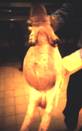
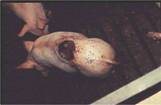
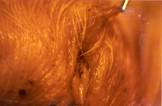
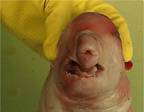
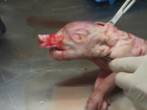
General facial abnormalities – three shown A range of other
abnormalities including inversion of abdominal contents, specific organ defects
are all recognised but the genetic or specific cause has not been recognised. |
||||
|
|
|
|
||
|
General multiple abnormalities |
Defect of the kidneys – horseshoe kidneys |
Muscle defect – full of fluid |
||
|
|
|
|
||
|
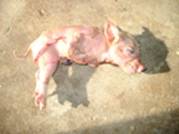
Limb defects |
Blocky legs |
Missing tibia |
||
















|
|
|
|
|
Missing limbs |
Congenital porphyria (left) |
Toe defects |