14
to 21 Day Post-Service Vulval Discharge
|
Definition |
Infection of uterus during breeding, which is released at
the next oestrus |
|
Clinical signs |
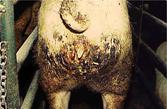
Sows with a creamy cheesy discharge from the vulva which
subsequently repeat |
|
Causal agent |
None specifically identified. Escherichia coli (E. coli), staphylococcus,
streptococcus and klebsiella are often isolated from swabs |
|
Management factors |
Infection of the genital tract late in oestrus |
|
Treatment |
|
|
Individual |
|
|
1 |
If the sow returns to oestrus 18 to 21 days post-service,
cull the sow |
|
2 |
No antimicrobial therapy will be effective at stopping
discharge or maintaining 'pregnancy' |
|
Herd |
|
|
Breeding control |
|
|
|
Two services only are needed 24 hours apart am/am ideally |
|
Only serve sows in standing heat, recognised the signs of
oestrus. Late serving is strongly
associated with 14-21 day vulval discharges |
|
|
Use all AI or Use single natural service followed by AI |
|
|
Breeding area hygiene |
|
|
|
At all times stalled sows must be separated from her urine
and faeces |
|
Clean any sow with a soiled rear prior to service. Ideally this should be done on arrival to
service area |
|
|
Avoid human contact with the boar's penis during service,
only use prepuce to direct penis |
|
|
Ensure that the underline of the boar is kept clean by
managing the boar in a clean dry environment |
|
|
Ensure service is carried out on a good non slip floor |
|
|
Do not serve lame sows with boars, only use AI |
|
|
Cease heat checking by 'thumbing' |
|
|
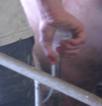
Ensure AI service carried out by single use disposable
catheters |
|
|
Farrowing house management |
|
|
To limit trauma and infection of the
vagina and bladder |
|
|
|
Improve hygiene behind the sow by manually removing faeces
3 days prior and 7 days post-farrowing.
Very dirty rear regions should be cleaned with soap and water |
|
Reduce manual farrowing as much as possible, use plastic
gloves and clean hands |
|
|
All sows manually farrowed should receive a suitable
antibiotic by 16 g 1.5" needle intramuscularly into the neck |
|
|
Encourage the correct use of oxytocin at 5 IU doses |
|
|
Ideally increase lactating length to 24 days |
|
|
Increase water supplies to flush out vagina |
|
|
|
Heat check three times daily in breeding area and ensure
sows rise and urinate |
|
Ensure water supplies clean and freely available |
|
|
Antibiotic therapy |
|
|
|
Consult your veterinarian |
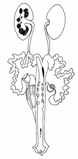
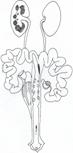
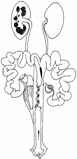
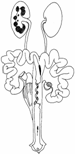
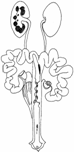
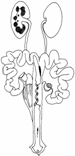
The pathogenesis of 14-21 post-service vulval discharges:
Normal events in good standing heat |
||||||||||
|
|
|
|
|
|
||||||
|
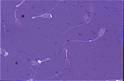
12 x 1010 sperm and normal bacteria in 150 ml enters
the uterus. Protective oestrogen
levels are high |
Uterine
contractions rapidly transport semen to oviducts. 100,000 sperm only enter oviduct |
The
uterine defence mechanisms kill off any sperm remaining in the uterus and any
bacteria |
After
ovulation uterine defence mechanism switches off. Progesterone rises.
Cervix closes |
Day 2-3
embryos enter the uterus. Pregnancy
continues. Embroys implant in
insensitive uterus |
||||||
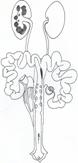
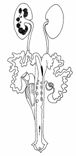
Serving late |
||||||||||
|
|
|
|
|
|
|
|||||
|
Sow
possibly still in some standing heat, may need some force. 12 x 1010
sperm in 150 ml with normal bacteria
enters the uterus. |
Uterine
defence mechanism reduced under increased progesterone levels. |
Uterine
contractions poor with poor uptake of semen |
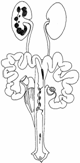
Uterine defence
mechanism not activated to kill off sperm or invading bacteria. |
Cervix
closes trapping the invading bacteria.
Bacteria multiply and uterus responses with normal immune response. |
|
|||||
|
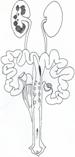
Infection
killed. Purulent material trapped by
closed cervix. |
No
positive pregnancy signals. Sow
prepares to return on days 18-24 |
Day 14 to
21 cervix opens and purulent material is released. Healed uterus looks normal |
|
|||||||