Lameness in Pet Pigs
|
Conformation concerns |
|||
|
|
|
||
|
Leg length – good length of
leg |
Leg length – too short |
||
|
Leg angle |
|||
|
|
|
||
|
Good leg angle – good foot wear |
Dropped pasterns, supernumerary digits are in contact with floor |
||
|
|
|
||
|
Inversion of the foot – varus weight moved to the lateral foot |
|||
|
|
|
||
|
Toes point outwards – valgus – lateral deviation – weight moved to the medial foot |
|||
|
Problems seen particularly with angular deformities |
|||
|
|
|
||
|
Screw toes |
|||
|
|
|
||
|
Rolled hoof wall |
|||
|
Other toe and lower leg deformities |
|||
|
|
|
||
|
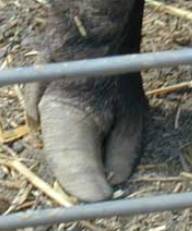
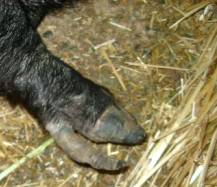
Splaying of toes |
Genetic abnormalities – mule foot |
||
|
|
|
||
|
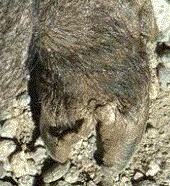
Uneven toes, enlarge lateral toe |
Toes overgrowth |
||
|
|
|
||
|
Hoof craw, from coronary band. |
Corn – swollen heel |
||
|
|
|
||
|
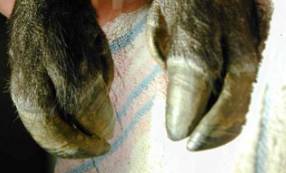
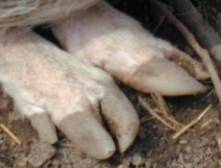
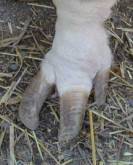
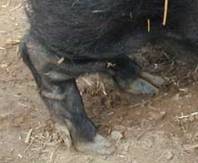
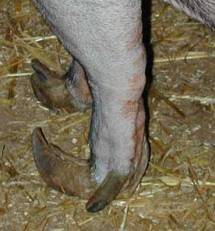
Overgrowth of supernumerary digit |
|||
|
|
|
||
|
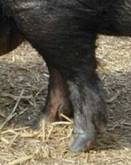
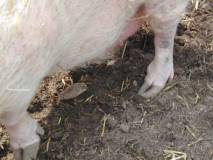
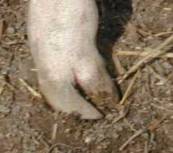
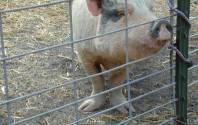
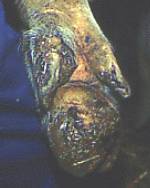
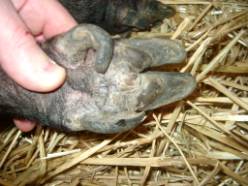
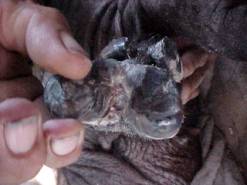
Interdigital growth |
Interdigital abscess |
||






















|
General locomotor problems |
||
|
|
|
|
|
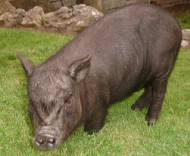
Arthritic pig – middle aged |
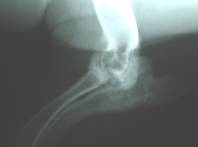
X ray of an arthritic limb |
|
|
|
|
|
|
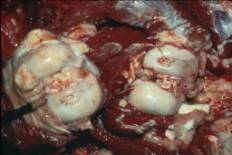
OCD in a growing pig |
OCD lesions – these can be very common |
|
|
|
|
|
|
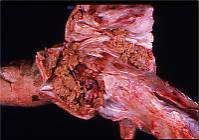
Infected leg following trauma as shown at postmortem – another pig stood on the leg |
||
|
|
|
|
|
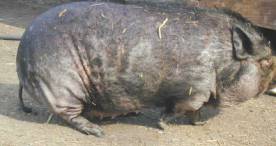
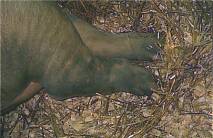
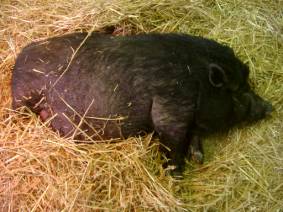
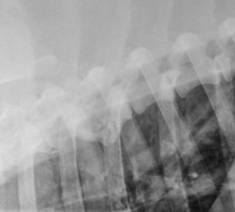
Paralysis of the hind legs occurs due to a number of reasons – example shown was a invasive lymphoma growing adjacent to the spinal column - arrow |
||


|
Control:
Providing good a hoof environment |
|
|
|
|
|
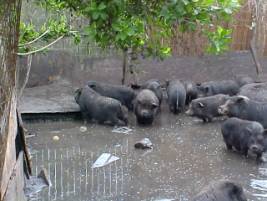
Muddy paddocks make for soft feet |
Poor welfare conditions, often related to poor foot care |
|
|
|
|
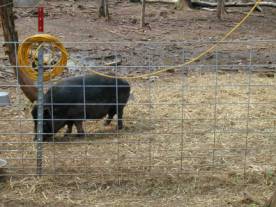
Straw can be very clean but is none wearing |
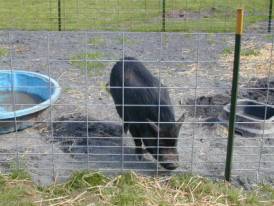
An area of screenings will allow the pig’s feet to wear more normally |
|
Treatment |
|
|
|
|
|
Trimming while conscious |
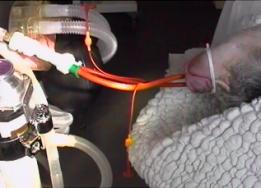
Trimming under anaesthesia |