Other brood
conditions to note
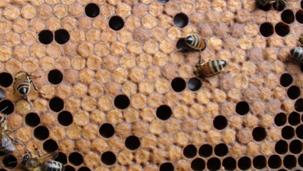
The larvae die before capping in a twisted letter C shape (half-moon).
The larvae changes from the pearly-white to a yellow or light brown and then dark brown with their tracheal lines still present.
Many cells contain multiple eggs, often in chains
Drone eggs are laid in the smaller worker cells.
The queen may be superseded.
Cause –
Poor nutrition after emergence of the queen
Bald Brood
|
The
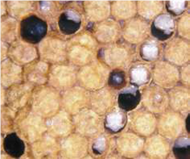
cappings to the worker cells are abnormal.
Damage
is often in a straight line of cells. The
head of the pupae under the damaged cap appear normal and are alive The
pupae normally will still continue pupation and emerge normally. |
|
Cause –
Larvae of the Greater Wax Moth chewing through the cappings of pupating larvae
Control –
Remove wax moths from hives.
- The cappings are absent or deformed
Possible genetic defect.
Introduce new queen.
Drone laying queen
Domed drone cappings over worker cells
Abnormally small done pupae within cells
Unsealed brood may be neglected and dying
Cause – Done laying queen
Treatment – Replace queen
Laying workers
|
Domed drone cappings over worker cells Abnormally small done pupae within cells Unsealed brood may be neglected and dying Multiple eggs may in present in cells adhering to sides of the cell |
A queen cell |
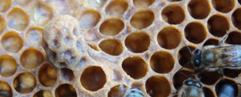
Cause – No queen
Treatment –
Unhealthy hive –
Kill hive and sterilize equipment before reuse.
Healthy hive -
Move colony 20 m from its original position
Remove all the brood frames and shake bees off each comb onto the ground
Allow the bees to find their way into other colonies
Sterilise equipment before reuse.

Multiple eggs laid in the cells
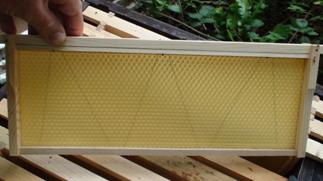
Foundation wire
The layout of the wires supporting the comb may interfere with the bee’s willingness to use the cells above the wires. This leads to a line of empty cells.
|
|
|
|
Empty cells in a line may indicate the position of the foundation
wires |
|
|
|
Note the foundation wires (arrowed) within the frame
foundation. |